

Businesses these days demand real insight into their marketing efforts. They need to see exactly where the budget flows, the difference it makes, and whether every rupee truly boosts their brand or drives revenue. Enter performance marketing: the smart fix for all that uncertainty.
Step away from traditional marketing’s “pay upfront and cross your fingers” mindset. Here, you invest only in results you can measure, refine, and grow like actual clicks, sign-ups, purchases, or installs.
The Basics
Performance marketing runs on data, with payments tied to concrete actions. It’s firmly in the inorganic camp, powered by paid tactics such as search campaigns, social promotions, or affiliate partnerships that deliver targeted traffic and quick wins.
While organic strategies like SEO, blogs, and community building foster lasting connections over time, this paid approach brings instant reach and speedier payoffs through focused spending.
Key Components of Performance Marketing
Performance marketing relies on key channels where buyers show clear interest. Each one has simple ways to use it well. Let’s go through them one by one with tips to start strong.
Search Platform Ads
People use Google or Bing to find what they need. A search for “best laptop for students under ₹40,000” means they plan to buy. Your ad appears at the top, turning searchers into shoppers fast. You pay per click or sale. In India, Google Ads handles most searches, over 1 billion daily.
Pro Tip: Use exact match keywords like “laptop for students ₹40,000” to reach real buyers. Block extras like “cheap” or “used” with negative keywords. Check your dashboard daily for click costs, aiming for under ₹20 per good lead. Use free extensions like site links to show more info and boost clicks by 15%.
Social Media Ads
Facebook, Instagram, YouTube, and LinkedIn reach billions. Pick people by age, likes, or jobs like “new moms who like baby gear.” Ads blend into feeds. Instagram Stories grab attention quickly; LinkedIn suits business products.
Pro Tip: Start with video ads under 15 seconds as they get 2x more views. Build “lookalike” groups from your best buyers for 3x better results. Remind cart leavers with discount ads; they bring back 30% more sales. Split test two ads at once and run for 3 days, pick the winner. Spend ₹300-500 a day to learn fast.
Marketplace Ads
Amazon, Flipkart, Myntra, and apps like Blinkit draw ready shoppers. Sponsored spots put your item first in searches. Flipkart’s “top picks” help electronics sell big; Nykaa boosts beauty with image ads. Quick apps turn “milk” searches into 10-minute deliveries.
Pro Tip: Upload 7+ clear photos per product because sales jump 20%. Bid on your top words, like “wireless charger fast.” Track “ad cost of sales” and keep it at 20% or less. Refresh listings weekly with deals to stay on top. For apps, target evenings when orders peak.
Affiliate Marketing
Brands team with bloggers, YouTubers, or sites. They share unique links; you pay 8-25% only on the sales they bring. Cuelinks connects Indian brands to 10,000+ partners.
Pro Tip: Offer bonuses for the first 10 sales to hook good partners. Use coupon codes in links for easy tracking. Check reports weekly and cut low performers under 5% commission rate. Tools like Impact block fake traffic, saving 10% of the budget. Start with a ₹5,000 test to find stars.
How It’s Different from Old Digital Marketing
Old digital marketing spreads your name with display ads, emails, or videos. You pay fixed amounts and measure views, shares, or time spent. It’s top-level that builds slow awareness, like watering plants.
Performance marketing targets actions: clicks, forms filled, and buys made. Pay only when it happens. Key numbers: cost per buy (under ₹500 ideal), return on ad spend (3x+), and buy rate (2-5%). Pause weak ads in hours, not weeks. Real example: A shoe brand spent ₹1 lakh on Facebook performance ads, got ₹4 lakh sales in a month, 4x return. Old methods might cost the same for just 10,000 views.
This makes it safer and smarter for growth. Pick one channel, test small, scale what works.
Also Read: SEO vs SEM: Which is Better for Your Business Growth?
The Advantages of Performance Marketing
Digital marketing is here to stay and growing. Performance marketing gives clear edges that lead to real business gains. Let’s dive into the key advantages.
Cost Effectiveness: Pay Only When It Works
No money lost on ignored ads. You pay for specific results: clicks that lead somewhere, sign-ups, or sales made. This direct link makes it cheaper than flat-fee options like TV or print.
PhonePe grows users with friend referrals, and pays only when someone downloads and stays active. Local stores partner with bloggers for product promo, paying commissions just on purchases.
Result: Budgets stay controlled, returns rise steadily without big risks upfront.
Targeted Reach: Connect with the Perfect Crowd
Next up, precision. Reach people based on where they are, what they enjoy, or what they’ve done before. A coffee brand can show ads to “morning walkers who like strong brews.” It feels spot-on, not random.
Platforms make it simple: Facebook lets you pick interests and locations; Google spots customers who are ready to shop. A pet food company targets “dog owners searching for treats”, clicks turn to buys fast.
Add this: Combine traits like age and hobby for even better matches. Waste drops, connections grow stronger.
Measurable Results: Track and Improve Live
Building on that reach, everything shows clear numbers. Track click rates (how many taps your ad gets), conversion rates (taps to actions), and cost per win. Dashboards update by the minute, so you know what’s working right away.
Payment apps use this to smooth user sign-ups. Do people leave halfway? Make the process shorter, and see numbers improve on the spot. Compare ad sets side-by-side, learn daily. It’s like having a live report card that guides every move toward better outcomes.
Flexibility: Adapt Fast to What Happens
With solid data in hand, changes come easily. Ramp up for busy times, pull back when quiet, or test fresh ideas. No big commitments hold you back.
Fashion brands scale social ads during festivals, then adjust post-rush. Run two ad versions, “Cosy Sweaters” or “Warm Winter Picks”, and pick the champ quickly. Smart bidding tools do the heavy lifting automatically. This agility fits any business rhythm perfectly.
Types of Performance Marketing Services
To implement a successful performance marketing campaign, many brands partner with specialised agencies or companies focused on driving results.
Performance Marketing Agencies
A performance marketing agency lives and breathes results. They handle everything, from planning your campaign to tracking every click and tweaking what doesn’t work. Brands love them because they can spread ads across Google, Facebook, Instagram, and more without needing their own team of experts.
Performance-Based Marketing Companies
Some companies focus only on “you pay only when it works” campaigns. They connect you with partners who promote your products, give you special tracking tools, and share smart data insights. This makes it super easy to see what’s bringing in sales and improve fast.
Understanding Key Metrics in Performance Marketing
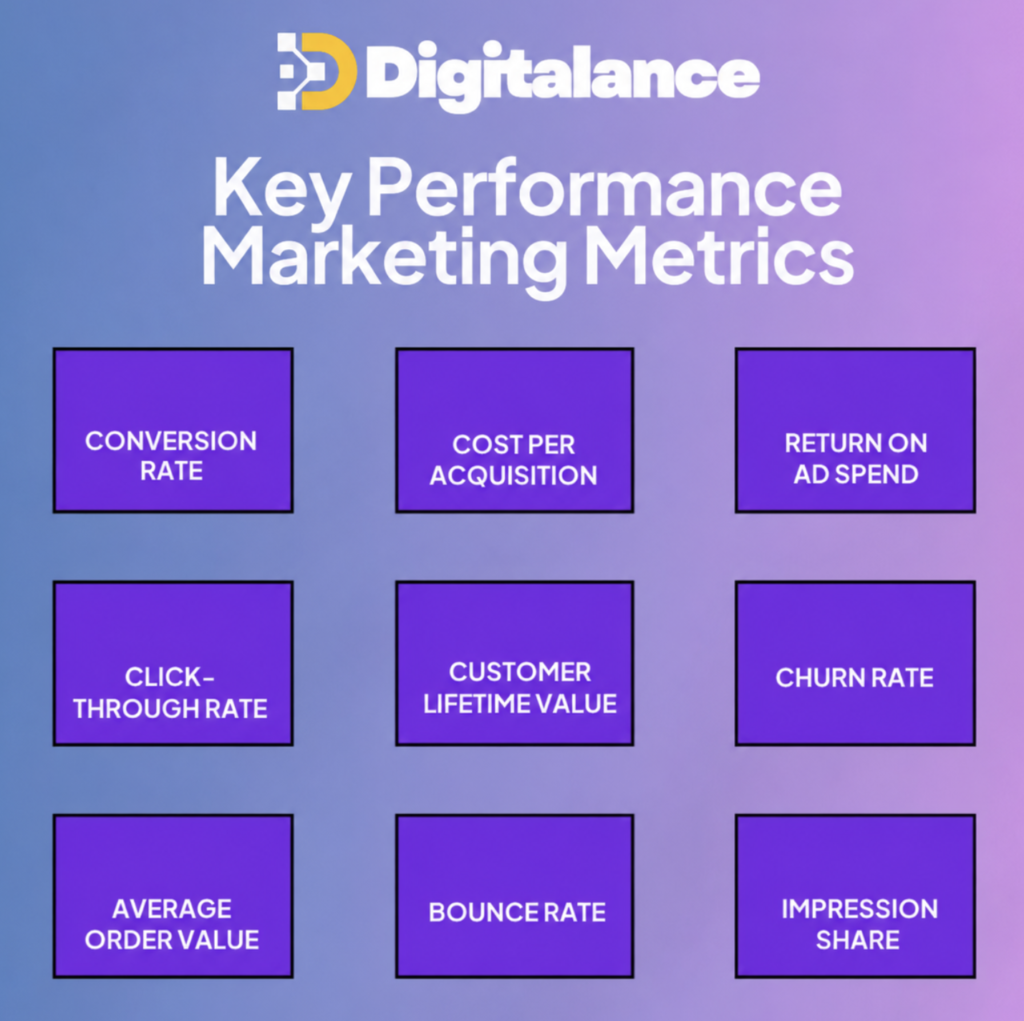
Success in performance marketing comes down to knowing your numbers. Here are the key metrics every campaign needs to track:
CPA (Cost Per Acquisition)
This shows the total cost to gain one paying customer through your campaign. It includes all ad spend divided by actual customers acquired. Marketers watch CPA closely because it directly ties to profitability, and when CPA stays below customer lifetime value, your campaign makes money.
CPL (Cost Per Lead)
Measures what it costs to get someone to take the first step, like filling out a contact form, signing up for a newsletter, or requesting a demo. CPL helps you understand early funnel efficiency before leads become customers.
ROAS (Return on Ad Spend)
Tells you exactly how much revenue comes back for every unit spent on advertising. A 4:1 ROAS means ₹4 earned for every ₹1 spent. This metric proves your campaign’s bottom-line impact and guides budget decisions.
CTR (Click-Through Rate)
The percentage of people who click your ad after seeing it (clicks ÷ impressions × 100). Good CTR shows your ad creative and targeting work together. Low CTR usually means weak messaging or the wrong audience.
Conversion Rate
Percentage of ad clicks that complete your goal (purchases, signups, downloads). If 100 people click but only 2 buy, that’s a 2% conversion rate. This reveals if your website delivers what the ad promises.
Tips to Start a Performance Marketing Campaign for Beginners
Steps To Build A Successful Performance Marketing Strategy
Understand Your Target Audience
Start with deep research into who buys from you. Map their age groups, daily habits, favourite websites, shopping triggers, and biggest frustrations. Build detailed buyer personas, including real people with names, jobs, and motivations. Use Google Analytics audience reports, Facebook Insights, and customer surveys. Speak their language in every ad to build instant trust.
Choose the Right Channels and Tactics
Match channels to where your audience lives online. Search marketing catches active hunters. Social media reaches casual browsers. Display ads build awareness. Affiliates bring trusted recommendations. Email nurtures warm leads. Content marketing attracts through value.
Develop Compelling Creative Assets
Your ads need to stop scrolling instantly. Use high-contrast images, bold headlines that solve problems, and buttons people can’t resist clicking. Landing pages must match ad promises exactly, same headlines, same offer. Test variations systematically: different images, copy, colors, button text. Winning combinations emerge in 3-5 days.
Implement Advanced Targeting and Segmentation
Go beyond basic age/location. Layer interests + behaviours (fitness app users who bought yoga mats). Use retargeting for website visitors. Create lookalike audiences from your best customers. Dynamic ads auto-fill products people viewed. Smart segmentation makes every impression count.
Future Trends in Performance Marketing for 2026
AI-Powered Performance Insights: Machine learning analyses patterns humans miss, predicting winners before launch and auto-optimising bids/pricing/creative in real time.
Personalisation at Scale: Individualised ads using browsing history, purchase patterns, even weather data, delivered to millions simultaneously.
Multi-Channel Campaigns: Unified tracking across search, social, email, apps, customers see consistent messaging everywhere they go.
Cookie-less Tracking: Privacy-first tech like server-side tracking, first-party data, and anonymised cohorts maintain accuracy as third-party cookies disappear.
Recommended Read: SEO vs SEM: Which is Better for Your Business Growth?
The Bottom Line
Undoubtedly, performance marketing is a powerful way for brands to drive growth in this competitive market. It’s only about, you pay only for actual results. With performance marketing, marketers can indeed maximise their budget, reach targeted audiences and track results. If you’re a business looking to optimise digital ad spend, the performance marketing experts at Digitalance can help you get a smart and data -driven approach to sustainable growth. We are one of the trusted performance marketing companies helping businesses to create a cycle where visibility fosters credibility and credibility brings growth. Get associated with us to know more about us.
FAQs
What is performance marketing?
Performance marketing means you pay only for real results like clicks, sign-ups, or sales, not for ads shown. It’s data-driven and uses paid channels to bring quick wins, unlike traditional ads, where you pay upfront.
What does a performance marketing agency do?
A performance marketing agency plans, runs, and improves your campaigns across platforms like Google and Facebook. They track everything and make changes to get the best returns, perfect for businesses without in-house experts.
What are some performance marketing examples?
Performance marketing examples include Google Ads, where you pay per click, Facebook promotions for sign-ups, Amazon sponsored products for sales, or affiliates earning commissions on purchases they drive.
How do performance marketing companies help businesses?
Performance marketing companies connect you with partners, provide tracking tools, and share insights to boost results. They focus on “pay for results”, so your budget goes straight to growth, not guesses.